Most people don’t think about accreditation until they really have to.
It usually comes up when someone is applying for a job, planning further studies, or trying to explain an online degree to an employer. But behind the scenes, accreditation plays a quiet role in keeping higher education grounded.
In 2026, education does not look the way it used to. Artificial intelligence is built into learning platforms. Classes move easily between online and in-person formats. Students enroll from different countries without ever setting foot on campus. All of this has forced accreditation to change too.
The Distance Education Accrediting Commission (DEAC) is surely one of the bodies adapting to that shift.
Why Accreditation Still Carries Weight
With so many programs available online, students have more choice than ever. But more choice also means more confusion. Not every program follows the same standards. Not every degree carries the same value.
This is where accreditation still matters.
Students have something solid to trust in because of accreditation. They can trust in an organization that has been reviewed, questioned, and expected to live up to certain criteria.
For an employer, it is a shortcut. It saves them from assessing the quality of each degree themselves. They simply rely on the accreditation.
In practical terms, it helps in:
- Confidence in the quality of education
- Recognition by employers and institutions
- Credit transfers & continued study
- Accountability when things go wrong
In the year 2026, the topic of accreditation will not really be concerned with tradition but with trust.
AI Is Already Part of Education, and That’s Not Changing
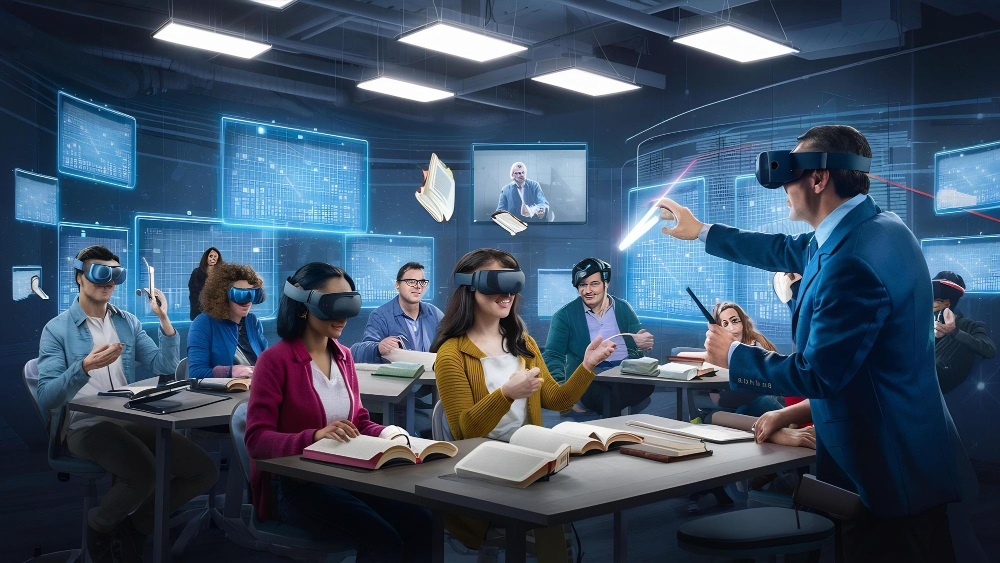
Artificial intelligence is no longer a future concept in education. It’s already here. Students use AI for research support. Faculty uses it for feedback or course development. It is used by institutions for analytics and student engagement.
But at the same time, the emergence of AI has also given rise to valid doubts. How do we know who really did the ? How do we quantify the progress of students if answers can appear the moment the tool is turned on?
“Accreditors are paying attention.” Recent findings from McKinsey and Company have also revealed that learning environments assisted by artificial intelligence have potential benefits for human skillsets and learning efficiency. Forbes also reported that investment in AI across education platforms is increasing steadily. It seems that there is no end to these changes.
So accreditation has shifted focus. Typically, rather than asking if the use of AI exists, review teams now ask:
- Is AI being used in a responsible manner?
- Are the students really understanding the material?
- Are tools used in ways directed by the faculties?
- Are policies clear and enforced?
There is room for experimentation, but none for confusion.
Hybrid Learning Is No Longer a Special Case
“Online vs. Offline,” you see, is something of an archaic debate. Now it’s just how education happens.
Of the many students in the class, some attend the sessions in real, while others attend the sessions online. Assessments are conducted online as well. Group work can sometimes involve different time zones. This is normal in many classes, particularly for working professionals. This reality has been met by accreditation. Instead of focusing on where learning is taking place, accrediting bodies are concerned with how the learning is taking place.
These areas include:
- Whether the faculties are trained on blended learning
- How the students stay connected and supported
- The Reliability of Learning Platforms
- Consistency in academic standards
Hybrid learning is no longer viewed as a risk but as a responsibility.
Global Education Needs Common Signals
Education now crosses borders easily. Students enroll in programs offered by institutions they may never visit. Employers review qualifications earned online from other countries.
This is where accreditation becomes especially important.
A designated accrediting body serves as a common reference point. It helps people understand the implications of a degree, even when learning is happening remotely.
DEAC’s involvement in the accreditation of distance and online institutions supports this global initiative. It does not make education uniform, but makes it understandable.
For the students, this produces a sense of certainty and for institutions, this creates a sense of credibility beyond location.
What Accreditation Is Paying Closer Attention to in 2026
Today, accreditation is not a once-in-a-while check but a continuous process. Institutions are expected to progress, reflect on, and improve over time.
Specific areas of close attention include:
- Learning Outcomes and Student Achievement
- Use of technology and digital tools
- Academic Integrity including AI policies
- Student completion and retention
- Internal practices in quality assurance
It is a very realistic approach because education will change all the time, and quality needs to follow it.
Where Acacia University Fits Into This Picture
For students exploring accredited online education, how an institution approaches learning makes a real difference.
Acacia University is accredited by the Distance Education Accrediting Commission (DEAC), recognised by the U.S. Department of Education. Our programs are designed for professionals who need flexibility but still want structure and academic depth.
Acacia focuses on:
- Graduate programs such as the MBA and DBA, with an emphasis on leadership and applied learning
- Education and leadership pathways for professionals moving into administrative roles
- Online formats that fit around work and personal commitments
Clear academic policies, credit transfer pathways, and structured support systems reflect how accredited education is delivered today, not how it worked years ago.
Frequently Asked Questions
Is DEAC accreditation in online education genuinely valuable?
Yes. It confirms that the institution meets recognised standards and is accountable for quality and outcomes.
How are hybrid qualifications received by employers?
If earned from an accredited institution, they are accepted widely.
Is accreditation significant to International Students?
Yes. It ensures that degrees are understood and trusted worldwide
What are the three types of accreditation?
There are three common types of accreditation:
- Institutional accreditation looks at the entire college or university and checks overall quality and standards.
- Programmatic accreditation focuses on specific courses or departments, like business or engineering.
- Professional accreditation ensures a programme meets the standards required for a particular profession or licence.
A Quiet but Important Role
Accreditation rarely makes headlines, but it shapes how education evolves. As AI, hybrid learning, and global classrooms continue to grow, accrediting bodies like DEAC help keep standards clear and expectations realistic.
For students navigating education in 2026, accreditation remains one of the strongest signals that a program is worth their time and effort.