
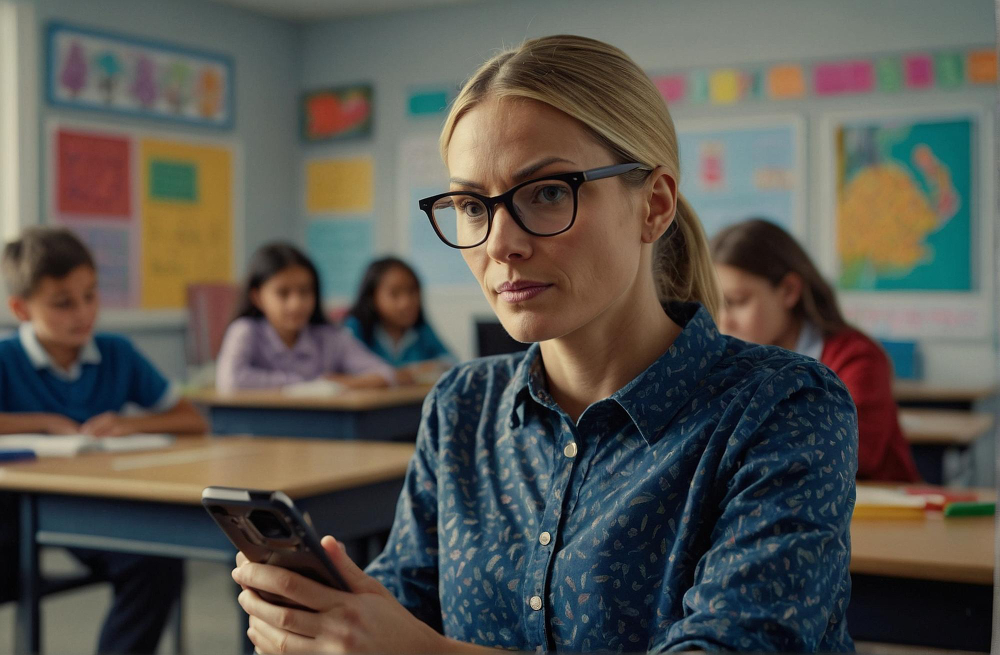
A phone used to be something students were told to put away when class began. In 2026, many schools are going a step further: students are being asked to put the phone away for the entire school day.
Across the U.S., cellphone restrictions are becoming part of school policy rather than simply an individual teacher’s classroom rule. Some schools use locked pouches. Others require phones to stay in lockers or backpacks. In some districts, students cannot access their devices even during lunch or between classes.
For teachers, that can mean fewer interruptions and less time spent reminding students to put their phones away. For principals, however, the decision is more complicated. A schoolwide phone policy also raises questions about discipline, parent communication, emergencies, student well-being, accessibility, and how consistently the rules can actually be enforced.
And there is another question that matters just as much: Do phone bans actually improve learning?
The answer from recent research is more nuanced than the headlines suggest. Phone restrictions can clearly reduce device use, but their effects on grades, attendance, discipline, and student well-being vary. As more states move toward stricter cellphone policies in 2026, teachers and school leaders need to understand what the evidence says—and what it does not.
Why Are Schools Banning Cellphones?
The word “ban” can be misleading. In many schools, students are still allowed to bring their phones to campus. The restriction is about when they can access or use them.
The reason is fairly straightforward: phones can compete with instruction for students’ attention.
A student can move from a classroom activity to a text message, social media post, video, game, or group chat in seconds. For teachers, repeatedly asking students to put their phones away can become part of the daily routine.
School leaders are also concerned about issues that extend beyond academic distraction. NCES data shows that 73% of public school leaders felt cellphone use had negatively affected students’ attention spans, while 72% reported negative effects on mental health.
That does not prove that phones cause every problem schools are seeing. It does show why so many educators believe the issue needs attention.
Why 2026 Is a Turning Point for School Phone Policies
The biggest change is that cellphone policies are increasingly moving from individual school decisions to state requirements.
The National Conference of State Legislatures reported in July 2026 that 42 states, Washington, D.C., and Puerto Rico had enacted legislation related to cellphone use in schools. These laws do not all require the same thing. Some focus on instructional time, while others require restrictions throughout the school day. Many also include exceptions for health needs, special education, emergencies, translation, and educational purposes.
That distinction matters.
A state law requiring districts to create a cellphone policy is not the same as a statewide bell-to-bell ban.
For teachers and principals, however, the direction is clear: school leaders are increasingly being asked to create consistent systems for managing personal devices rather than leaving the decision to individual classrooms.
What Is a Bell-to-Bell Phone Ban?
A bell-to-bell phone ban generally means students cannot access personal phones from the beginning of the school day until dismissal.
| Policy type | What it usually means |
| Classroom restriction | Phones cannot be used during lessons. |
| Instructional-day restriction | Phone access is limited during instructional periods. |
| Bell-to-bell policy | Phones remain inaccessible throughout the school day. |
| Lockable pouch system | Students keep their phones but cannot access them during restricted periods. |
| Storage policy | Phones are kept in lockers, backpacks, bins, or another designated location. |
The difference is important because each approach creates a different workload for teachers and administrators.
With a classroom-only policy, individual teachers may be responsible for monitoring compliance. With a bell-to-bell system, the school has to create a consistent process for storage, exceptions, communication, and discipline.
The District of Columbia offers one example of the broader approach. Its law requires local education agencies to adopt policies restricting students’ possession of personal wireless communication devices during the full school day, while allowing exceptions for certain educational and health-care needs.
What Does the Research Actually Say?
This is where the conversation gets more complicated.
A 2026 National Bureau of Economic Research study examined school cellphone restrictions across the country using survey data, GPS information, standardized test scores, school administrative records, and sales data from the largest lockable-pouch provider. The researchers found that adopting lockable phone pouches substantially reduced phone use.
But less phone use did not automatically mean higher test scores.
The study found that average effects on test scores were consistently close to zero. High schools saw modest positive effects, particularly in math, while middle schools saw small negative effects. Researchers also found that disciplinary incidents increased during the first year after adoption and then faded, while effects on student well-being became more positive in later years.
That is an important finding for school leaders.
A phone ban can reduce phone use without automatically improving academic performance.
At the same time, another NBER study found a different result.
Researchers examining cellphone bans in Florida found that enforcement was followed by a significant increase in suspensions in the short term, but those disciplinary effects began to decline after the first year. The study also found improvements in test scores in the second year after the bans were enforced.
So, are school phone bans effective?
They appear to be effective at reducing access to and use of phones. Their effect on grades, attendance, discipline, and well-being is more complicated and may depend on how the policy is implemented and how students and staff adjust to it.
That is a more useful conclusion than simply calling phone bans successful or unsuccessful.
What Do Students Think About Phone Bans?
Students and adults do not see the issue in exactly the same way.
A Pew Research Center survey found that 41% of U.S. teens supported banning cellphone use during class, compared with 74% of adults. When asked about banning phones for the entire school day, support fell to just 17% among teens, compared with 44% among adults.
The difference is worth paying attention to.
It suggests that many students may understand concerns about distraction without agreeing that an all-day ban is the right answer.
That does not mean schools should allow unrestricted phone use. It means student input can be useful when schools design the policy, explain its purpose, and decide how it should work in practice.
For school leaders, the question should not only be “How do we enforce this?”
It should also be “How do we explain why this policy exists?”
What Phone Bans Mean for Teachers
For teachers, a clear schoolwide policy can solve one of the most frustrating parts of classroom management: repeatedly asking students to put their phones away.
But there can be an adjustment period.
The national NBER study found that disciplinary incidents increased during the first year after lockable-pouch policies were introduced. That suggests schools may experience more enforcement challenges before a new routine becomes normal.
This is why teachers need more than a rule.
They need a system.
Before the school year begins, teachers should know:
- Where students are expected to keep their phones
- What happens when a student refuses to comply
- Who contacts parents or guardians
- What the emergency communication process is
- What medical and accessibility exceptions apply
- When a phone can be used for an approved educational purpose
- What happens after repeated violations
The Institute of Education Sciences has highlighted similar considerations, including enforcement, family communication, emergency procedures, digital literacy, equity, and accommodations.
Teachers should not have to work out these details while trying to teach a class.
What Principals Need to Get Right
A phone policy may fit neatly into a student handbook. Implementing it across an entire school is much harder.
Principals need to think about the practical details before enforcement begins.
First, the policy needs to be clear. Students, teachers, and families should know exactly when phones must be stored and what counts as a violation.
Second, enforcement needs to be consistent. If one teacher ignores phone use while another sends a student to the office for the same behavior, the policy can quickly become a source of frustration.
Third, exceptions need to be defined. Health needs, disability-related supports, emergencies, translation, and approved educational uses may require different treatment. State policies increasingly recognize these exceptions.
Fourth, communication with families matters. Parents need to know how they can reach their children during the school day and how the school will handle emergencies.
And finally, principals need a way to measure whether the policy is actually working.
That could include attendance, disciplinary referrals, teacher feedback, classroom disruptions, academic performance, student engagement, and feedback from students and families.
A successful phone policy should be judged by what changes in the school—not simply by how many phones are collected.
When Should Students Be Allowed to Use Phones?
Even strict school policies usually need exceptions.
A student may need a device for a documented medical reason. Another student may require an accessibility feature. A teacher may approve phone use for a specific learning activity. A school may need to provide a way for families to communicate during an emergency.
The exact rules depend on state and district policy, but exceptions are already a common part of state legislation. NCSL identifies health, special education, emergency, and language or translation needs among the most common exceptions.
The goal, therefore, should not be to create a policy that leaves no room for judgment.
It should be to create a policy that makes the normal expectation clear while explaining when exceptions apply.
A Phone Ban Is Not a Complete Classroom Strategy
Removing a phone can remove one distraction.
It cannot automatically create engagement.
A student who is uninterested in a lesson can still disengage without a phone. A student dealing with anxiety does not automatically feel better because a device is locked away. And a school cannot solve bullying, poor relationships, or weak classroom engagement through a cellphone policy alone.
This is where school leadership becomes important.
Students still need strong instruction, supportive relationships, opportunities to participate, and a school environment where they feel connected. There is also a larger question for educators: How should schools teach responsible technology use while limiting access to personal technology during the school day?
Students will eventually leave school and return to a world filled with smartphones, social media, AI tools, and digital communication. Schools have a role to play in helping them learn how to use those technologies responsibly.
7 Practical Steps for Teachers
1. Know the policy.
Understand exactly when phones must be stored, what exceptions apply, and what happens after a violation.
2. Explain the routine early.
Students are more likely to follow a rule when they know what is expected before the first problem occurs.
3. Keep enforcement consistent.
A common schoolwide approach makes expectations easier for students and staff to understand.
4. Avoid turning every violation into an argument.
Follow the established procedure instead of negotiating the rule during instruction.
5. Know the emergency process.
Students and families should understand how urgent communication works without direct phone access.
6. Document repeated problems.
Recurring violations should move through the school’s established disciplinary process rather than becoming an ongoing teacher-student conflict.
7. Replace distraction with engagement.
A phone-free classroom still needs meaningful lessons, discussion, collaboration, and opportunities for students to participate.
6 Questions Principals Should Ask
Before introducing or tightening a school cellphone policy, school leaders should ask:
- Can our staff realistically enforce this policy every day?
- Where will students keep their phones?
- What happens when a student refuses to follow the policy?
- How will parents communicate with students during the school day?
- What health, accessibility, emergency, or educational exceptions are necessary?
- How will we measure whether the policy is working?
That last question deserves particular attention.
A policy should not become permanent simply because it sounds reasonable. Schools can collect data, listen to teachers and students, review disciplinary patterns, and adjust the policy when the evidence points to a problem.
In fact, some current state policies are already moving in this direction. D.C.’s cellphone law requires education agencies to establish a process for assessing whether their policies are working and how they should be refined.
Frequently Asked Questions
Why are U.S. schools banning cellphones in 2026?
Schools are restricting cellphones mainly to reduce classroom distraction and address concerns about attention, academic performance, student behavior, and the school environment. NCES reported that 77% of public schools prohibited cellphone use during any class, while 53% of school leaders said cellphone use had negatively affected academic performance.
Are school phone bans effective?
They are effective at reducing phone access and use, but their broader effects are less certain. Recent research has found mixed results for academic performance, discipline, attendance, and well-being.
What is a bell-to-bell phone ban?
A bell-to-bell policy generally prevents students from accessing personal cellphones from the beginning of the school day until dismissal, including during periods such as lunch and class changes. The exact requirements vary by state and school district.
Do school phone bans improve grades?
Not necessarily. A 2026 nationwide NBER study found that average test-score effects from lockable phone pouches were close to zero, although high schools saw modest positive effects. A separate Florida study found test-score improvements in the second year after cellphone-ban enforcement.
Do students support school cellphone bans?
Support is considerably lower among teens than adults. Pew found that 41% of teens supported classroom cellphone bans, while only 17% supported banning phones for the entire school day.
What should teachers do when students refuse to follow a phone policy?
Teachers should follow the school’s established enforcement procedure rather than creating their own consequences. A clear escalation process can reduce arguments and keep classroom instruction on track.
Should schools ban phones completely?
There is no single policy that works for every school. Leaders should consider student age, school culture, safety procedures, accessibility needs, family communication, enforcement capacity, and evidence from their own school community.
Education Leadership Is Changing. So Is the Role of the School Leader.
The cellphone debate is only one example of the decisions educators now face.
School leaders are working at the intersection of technology, student behavior, family expectations, education policy, and learning outcomes. The challenge is not simply deciding whether students should have their phones. It is understanding how a policy affects the people and systems within a school—and knowing when that policy needs to change.
That requires thoughtful leadership.
For teachers and education professionals preparing to take on broader responsibilities, advanced study can provide a stronger foundation for understanding educational policy, organizational decision-making, technology, and school leadership.
Acacia University offers graduate programs for education professionals who want to build their knowledge and prepare for the changing demands of educational leadership. Explore Acacia University’s programs and take the next step in your professional journey.