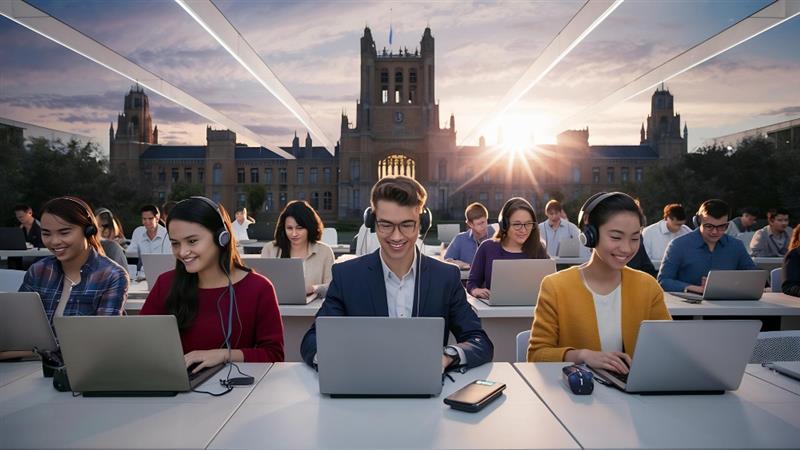
Many professionals today are thinking about their next step. Some want better roles, while others want to move into a new field. For many people, going back to college is not easy. Work schedules, family responsibilities, and rising costs often get in the way. Online degrees have become a practical option for this. In 2026, more people are choosing a learning format that works around their schedule instead of disrupting it. Many are balancing jobs, families, and personal goals, and they need education that works with their schedule, not against it.
Online learning has stepped into that space. It offers a different way to study—one that feels more practical for modern life.
Online Learning Has Become a Normal Choice
A few years ago, online education was often seen as an alternative. Now, it is part of the system itself.
Recent numbers give a clear picture:
- Around 57% of U.S. students took at least one online course in 2023
- More than 53% of students are enrolled in at least one online class
- About one-third of students study fully online
- 60% of online learners in the U.S. work full-time
These figures clearly show how widely online learning has been accepted.
Flexibility is Changing How People Study
For most learners today, time is limited. Work deadlines, family needs, and daily responsibilities leave little room for fixed schedules. This is where online degrees make a real difference. Instead of adjusting everything else, students can plan their studies around their day.
Someone working a full-time job might study in the evening. A parent might log in after their child goes to bed. These small adjustments make it possible to continue learning without stepping away from other responsibilities.
Research shows that over 60% of online learners in the U.S. work full-time, which explains why flexible learning matters so much
Learning Without Disrupting Daily Life
Traditional education often requires big changes. Moving to a new city, leaving a job, or managing long commutes can be part of the process.
Online learning removes many of these challenges. Students stay where they are and build education into their existing routine.
Instead of planning life around college, they fit college into life. That simple shift has made a big difference for many people.
Cost Plays a Big Role
Higher education in the United States can be expensive. Tuition alone is a concern, but living expenses add even more pressure. Online degrees help reduce some of these costs. There is no need to relocate or spend on daily travel. Many students also continue working while studying, which helps them manage expenses better.
For someone who has been delaying education due to cost, this can make the decision easier.
Learning That Connects to Work
Most students today aren’t starting from scratch. They already have some work experience and are simply trying to grow from where they are.
That’s why many online programs are designed differently. Instead of focusing only on theory, they lean more toward skills that can actually be used on the job.
For example, someone working in marketing might try out new ideas on a live campaign, while a manager could apply leadership concepts in their team right away. Learning doesn’t feel separate anymore—it becomes part of the work itself.
Because of this, the whole process feels more relevant and, honestly, more interesting to stay with.
Employer Perception Has Changed
There was a time when online degrees raised questions. That hesitation has reduced over the years. Today, employers are more familiar with online education and understand how it works.
This change has made students more confident in choosing online programs.
Technology Has Improved the Experience
Online learning today is very different from what it was in the past. It is not limited to reading materials on a screen.
Students now attend live sessions, watch recorded lectures, and take part in discussions. If they miss something, they can go back and review it.
This flexibility helps many learners understand topics better. Instead of rushing through a lecture, they can take their time and learn at their own pace.
A Practical Choice for Adult Learners
A large number of online students are adults who want to continue their education later in life.
Data shows that many learners fall in the 25 to 34 age group
These individuals are often thinking about the next step in their careers. Some want better roles. Others are looking to switch fields.
Online degrees give them a way to move forward without starting over or putting everything else on hold.
More Options Than Ever Before
Location used to limit educational choices. Students often had to choose from nearby colleges.
Now, that is no longer the case. Online programs allow students to explore options across the country.
This makes it easier to find courses that match personal goals, whether it is a specific subject, teaching style, or schedule.
Some Challenges Still Exist
Even with its advantages, online learning is not perfect.
Some students find it hard to stay consistent without a fixed routine. Others miss the energy of a classroom environment. But it is common that some learners feel less engaged in online settings.
These challenges are real, but many institutions are working on better support systems and interactive learning methods to improve the experience.
What the Future Looks Like
Online education continues to grow, and it is likely to become even more common in the coming years.
New technologies are making learning more interactive. Courses are becoming more focused on specific skills. There is also a growing interest in shorter programs that fit into busy schedules.
As these changes continue, online degrees will become an even stronger option for learners across different stages of life.
Conclusion
More Americans are turning to online degrees because life doesn’t slow down for education anymore. Jobs, family, and everyday responsibilities all take up time, and stepping away from them isn’t always realistic. Online programs make it possible to keep learning without making major changes.
You don’t have to move, quit your job, or follow a strict schedule. At the same time, the focus on practical skills means what you learn can actually be used right away. Over time, this has made online degrees feel less like an alternative and more like the obvious choice.
For many people, it’s simply a way to keep growing without putting everything else on hold.
Frequently Asked Questions
1. Why are online degrees becoming popular in the U.S.?
They allow people to study while managing work and personal responsibilities, making education more practical.
2. Are online degrees accepted by employers?
Yes. Most employers today recognize online degrees and treat them on par with traditional ones.
3. Who benefits the most from online education?
Working professionals, parents, and adults looking to continue their education often find online programs suitable.
4. Are online programs more affordable?
They can be, especially since students save on travel, housing, and other daily expenses.
5. Is online learning effective for all students?
It works well for many, especially those who prefer flexible schedules. However, it requires self-discipline.
6. Will online education continue to grow?
Yes. With better technology and changing lifestyles, more people are expected to choose online learning in the future.